Is Your Website Costing You Customers?
Your website might look fine on the surface, but small issues with speed and messaging could be quietly turning visitors away before they contact you.
By Oliver Hempsall · 29 June 2026
Web developer and digital marketer based in the UK, helping small businesses get more from their websites.

Most business owners assume their website is doing its job. It looks decent, it loads eventually, and it has a contact form somewhere. But "good enough" is a low bar, and it might be the reason your phone is not ringing as often as it should.
The truth is, websites lose customers in ways that are almost invisible. Visitors leave before a page finishes loading. They land on your homepage and cannot figure out what you actually do. They try to navigate on their phone and give up. None of these people will email you to complain. They will just leave, and you will never know they were there.
Here is how to spot the warning signs and what to do about them.
Slow load times push people away
Speed is the first test your website has to pass, and most sites fail it. Aggregated 2026 speed data shows 53% of mobile visitors abandon a page that takes longer than three seconds to load, and every additional second of delay costs a site roughly 7% in conversions on average. They are not patient, and they do not owe you their time.
The biggest culprits are usually unoptimised images, bloated plugins, cheap hosting and poorly written code. A single hero image that has not been compressed can add several seconds to your load time on a mobile connection.
To check your own site, run it through Google PageSpeed Insights. This tool will give you a performance score out of 100 and flag the specific issues slowing things down. Pay close attention to the Core Web Vitals section, which measures three things that matter most to both users and search engines:
- Largest Contentful Paint (LCP): How long it takes for the main content to appear. Aim for under 2.5 seconds.
- Interaction to Next Paint (INP): How quickly the page responds when someone clicks or taps. Aim for under 200 milliseconds.
- Cumulative Layout Shift (CLS): Whether elements jump around as the page loads. Aim for a score under 0.1.
If your scores are in the red, your website is actively costing you visitors. It is worth treating this as urgent.
A real example: the lead form nobody could submit
This is not hypothetical. I was talking to a client recently who could not understand why his enquiry form had gone quiet. Traffic was steady, the page looked fine, but leads had all but dried up. When we dug in, the problem was not the form itself, it was that it sat below a slow-loading section of the page, so a good number of visitors never actually saw it before giving up.
We fixed the load time, and lead submissions went straight back up. Nothing about the offer, the design, or the business had changed. The only thing standing between him and a working enquiry form was a few extra seconds of load time that nobody had noticed because the page still looked fine to the naked eye. This is the exact pattern above in practice: the visitors who leave before a slow element loads never tell you they were there, they just stop converting.
High bounce rate, low conversion
Your analytics tell a story, but only if you are reading them. Two numbers deserve your attention above all others.
Bounce rate is the percentage of visitors who land on a page and leave without doing anything else. If your homepage bounce rate is above 60%, something is wrong. Either the page is too slow, the content does not match what people expected, or the design is not giving them a clear reason to stay.
Conversion rate is the percentage of visitors who take a meaningful action, whether that is filling in a contact form, making a phone call, or requesting a quote. For context, the 2026 all-industry average website conversion rate sits at 2.35%, according to Contentsquare's Digital Experience Benchmark Report, while the top 10% of sites convert above 11%. For most service-based business websites, a conversion rate below 2% suggests the site is not pulling its weight.
If you are not tracking these numbers at all, that is the first problem to solve. Google Analytics is free to set up and gives you the baseline you need. If you are also spending money on paid ads to drive that traffic, a poor conversion rate is not just a UX problem, it is wasted ad spend. Our free Digital Ads Calculator can show you exactly how much a low conversion rate is costing you per campaign, before you spend another penny chasing more clicks to a page that is not converting them.
Poor mobile experience
More than 60% of all web traffic now comes from mobile devices, yet mobile still converts at roughly 42% lower than desktop, largely down to friction rather than a lack of demand. If your site was designed for desktop first (or worse, only for desktop), you are showing the majority of your visitors a broken experience.
Common mobile issues include text that is too small to read without zooming, buttons placed too close together, horizontal scrolling, and navigation menus that do not work properly on touchscreens. These are not minor inconveniences. They are reasons people leave.
Open your website on your phone right now. Try to complete the main action you want a customer to take, whether that is finding your phone number, filling in a form, or reading about your services. If it feels clunky or frustrating, it feels the same way to everyone else.
Unclear calls to action
Every page on your website should have a clear purpose. If a visitor lands on your services page, what do you want them to do next? If the answer is not immediately obvious, you have a problem.
Vague link text like "click here" or "learn more" does not tell anyone what they are getting. Competing calls to action, where three or four buttons fight for attention, dilute the message and lead to decision paralysis. And if your contact form is buried at the bottom of a long page with no other prompts along the way, most people will never reach it, exactly the trap the client above fell into.
Good calls to action are specific, visible and relevant to the page content. "Get a free quote" works better than "submit." A sticky header with your phone number works better than hiding it on the contact page.
Confusing navigation
If someone cannot find what they are looking for within a few seconds, they will not dig through your menu to find it. They will leave.
The most common navigation mistakes are having too many menu items, using jargon or internal language that customers do not understand, and burying important pages two or three levels deep. Your navigation should reflect how your customers think, not how your business is organised internally.
A simple test: ask someone who has never seen your site to find a specific piece of information. Time how long it takes. If they struggle, your navigation needs work.
What good looks like
A website that works well for your business does not need to be flashy. It needs to be fast, clear and focused.
That means pages that load in under two seconds. A layout that works just as well on a phone as it does on a desktop monitor. One primary action per page, with a clear and visible way to take that action. Content that speaks directly to what your customers are looking for, written in plain language.
It also means the technical foundations are solid. Clean code, properly sized images, structured data for search engines, and hosting that does not buckle under normal traffic.
Frequently asked questions
How do I know if my website is losing me customers? Check your load time on Google PageSpeed Insights, and look at your bounce rate and conversion rate in Google Analytics. A homepage bounce rate above 60%, a conversion rate below 2%, or a load time over three seconds are all warning signs worth investigating.
How much does page speed actually affect conversions? Industry data suggests every additional second of load time reduces conversions by roughly 7% on average, and over half of mobile visitors abandon a page that takes longer than three seconds to load.
What's a good conversion rate for a small business website? The 2026 all-industry average sits at around 2.35%, so anything above 3% for a service business puts you above average. Below 2% is usually a sign something in speed, messaging, or navigation is holding the site back.
Getting it right from the start
At Hempsall Digital, we build websites with all of this baked in from day one. Performance, mobile responsiveness, clear structure and conversion-focused design are not afterthoughts; they are the starting point. If you suspect your current site is letting you down, we are happy to take a look and give you an honest assessment of where things stand.
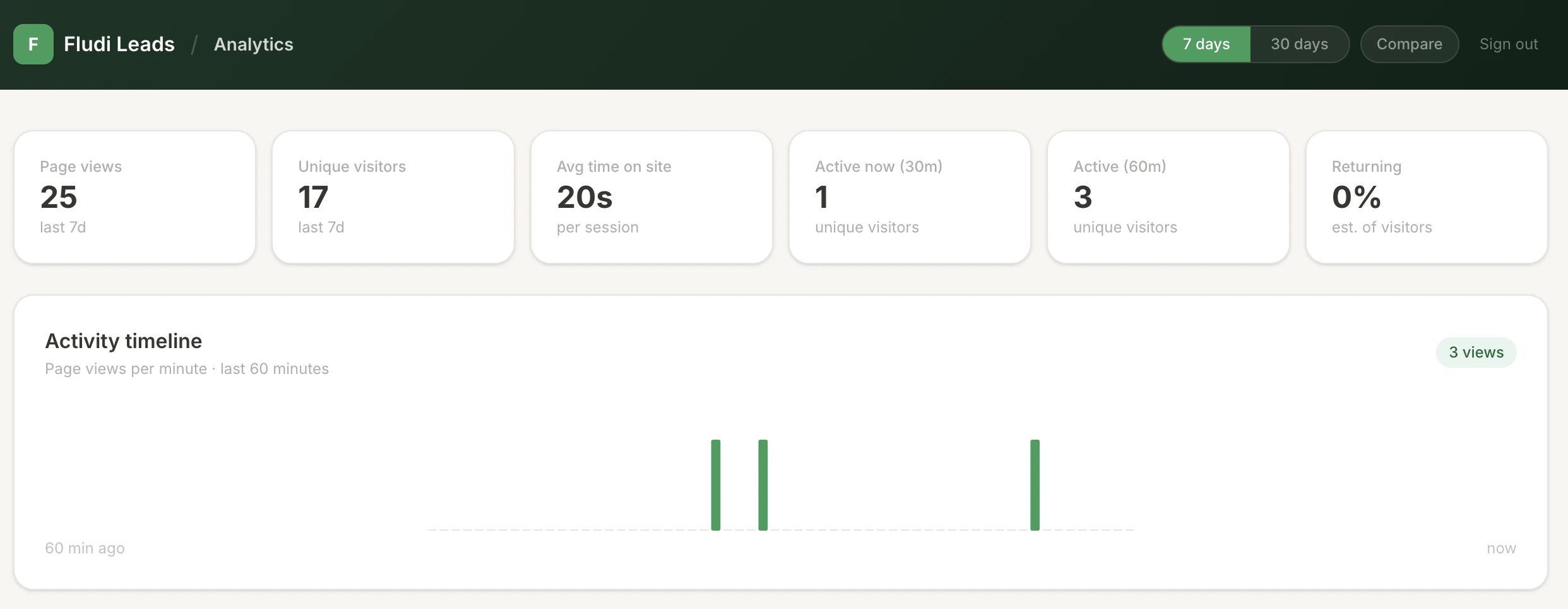
If you're a fellow web designer rather than a business owner, and you're more interested in finding businesses that need this kind of fix (or don't have a site at all yet), that's exactly the gap our own tool, Fludi Leads, was built to surface using Google's official Places data.
The first step is knowing there is a problem. If anything in this article sounded familiar, it is worth investigating before another month of lost enquiries slips by.