How to build a website for AI search
Learn how to build a website for AI search, covering schema, content structure, technical SEO and what actually gets a site cited by AI in 2026.
By Ollie Hempsall · 10 July 2026
Web developer and digital marketer based in the UK, helping small businesses get more from their websites.
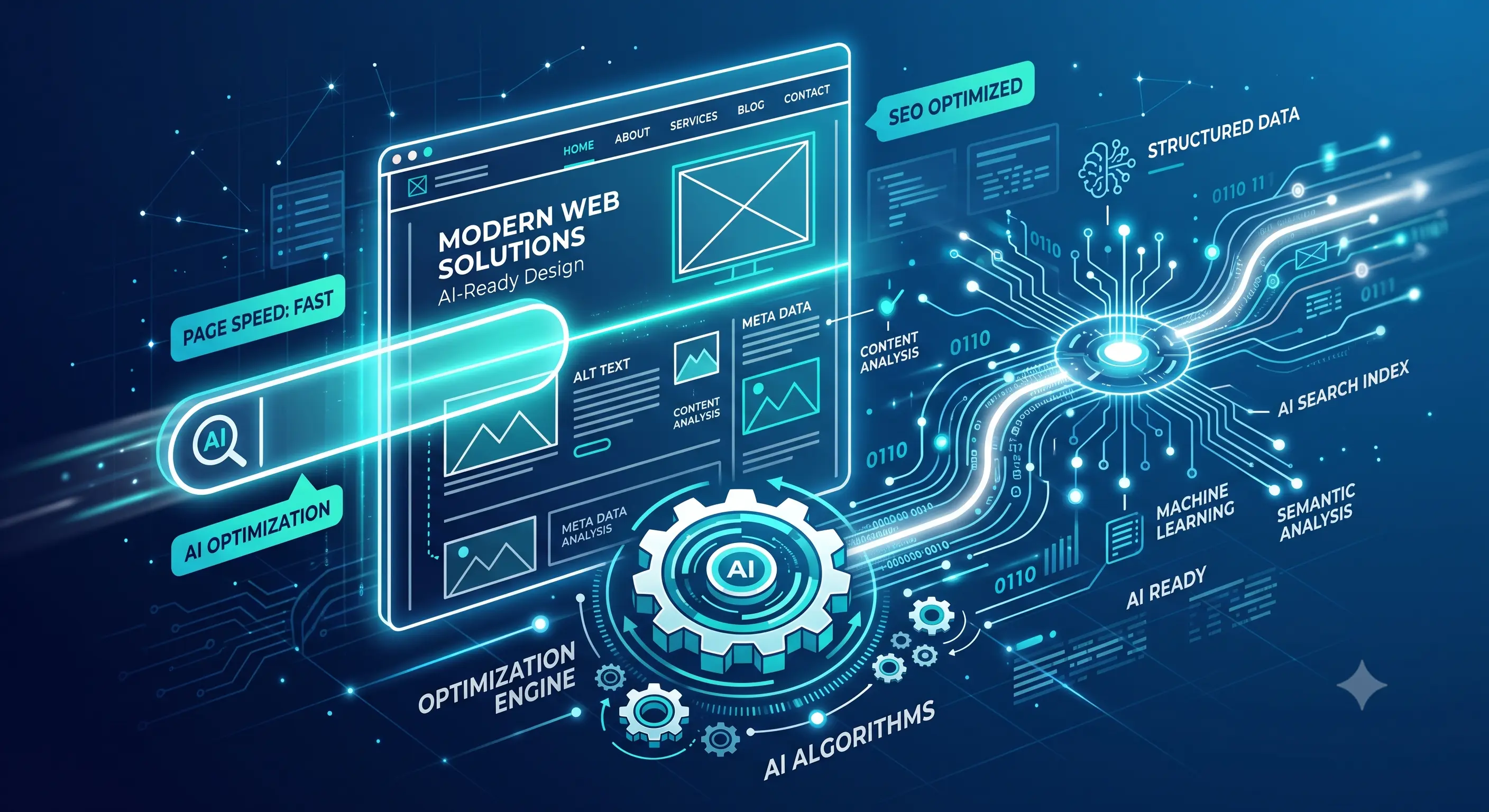
Building a website for AI search means getting the same fundamentals right that traditional SEO has always rewarded: fast, mobile-friendly technical performance, genuinely useful content, and a clear structure that makes each page easy to parse, then layering AI-specific work on top, such as FAQ sections, direct answer paragraphs and structured data. There's no separate "AI index" you can optimise for in isolation. If a site doesn't rank well organically, AI tools generally have nothing to pull from in the first place, so the foundations still come first.
A client recently asked me this exact question
A client asked me directly: if we add blog content, FAQs and schema markup, will the site appear more in AI Overviews? I said yes, and it's worth being precise about why, because the honest answer is more nuanced than most agencies selling "AI SEO" packages let on.
Schema markup on its own has a weaker effect than a lot of marketing content claims. Ahrefs tracked 1,885 pages that added JSON-LD schema and compared them against thousands of matched control pages, and found no meaningful citation increase on ChatGPT or Google's AI Mode, and a small decline on Google AI Overviews. Google's own documentation states there's no special schema type needed for AI Overviews at all. So what I actually told the client is closer to this: writing FAQs and blog content forces you to structure information the way people (and AI systems) actually ask questions, and that structural clarity, plus the extra indexed pages and internal links a blog naturally builds, is what improves your chances. Schema is still worth adding because it supports classical search ranking and helps some AI-powered surfaces like Bing's Copilot, but it's a supporting signal, not the lever that flips citations on.
AI search still runs on top of organic rankings, mostly
The strongest evidence still points the same direction: a site with no traditional visibility is very unlikely to be cited by AI. Semrush's analysis found 84% of AI Overview citation sources also rank in the top 10 organic results for the same query. That said, this relationship is loosening. Ahrefs' most recent data shows the share of AI Overview citations coming from top 10 organic pages has dropped from around 76% in mid-2025 to roughly 38% by early 2026, with a growing share of citations now going to video content, particularly YouTube, and to pages ranking well beyond page one.
The practical takeaway for a small business owner isn't to panic about the exact percentage, studies disagree on the specifics and the numbers are shifting month to month. It's that ranking well traditionally remains necessary, it's just no longer sufficient on its own. Diversifying where your expertise shows up, video, genuinely original content, credible mentions elsewhere, matters more than it used to.
Plenty of businesses we work with don't even have a website yet, which is exactly the gap our own lead generation tool, Fludi Leads, was built to surface for web designers doing outreach. If that's you, it searches Google's official Places data for local businesses with no site (or a social page only) and delivers ready-made prospects.
Structuring content so AI can actually extract it
Regardless of how much weight schema carries, content structure clearly matters, because it's what makes a page easy for both readers and AI systems to lift a self-contained answer from. In practice that means:
- Answering the core question in the first sentence or two of a section, not after several paragraphs of preamble
- Using descriptive H2s and H3s, ideally phrased as the actual questions people ask
- Restating the subject explicitly rather than relying on vague pronouns like "it" or "this"
- Building genuine FAQ sections that mirror real search queries, since FAQ-formatted content matches the question-and-answer shape AI systems are already built to extract
- Keeping content current, since AI systems tend to favour recently updated pages over stale ones
One of the more effective, less obvious tactics here is publishing something genuinely useful rather than just written, an original free tool or calculator tends to earn citations that a blog post alone can't, because it offers something unique to point to. That's part of why we built our free Digital Ads Calculator, a suite of ad metric tools that gets referenced precisely because it's a resource, not just an opinion.
Credibility signals matter alongside structure. AI systems, like search engines before them, weigh experience, expertise, authority and trust, collectively known as E-E-A-T, when deciding what's worth citing. In practice that means a proper author bio with real credentials attached to a piece of content, genuine first-hand examples rather than generic advice a template could have written, and consistent, accurate contact details across the site. This is also why every post we publish, including this one, carries a named author with a bio, rather than sitting anonymous or attributed to "Admin".
The technical baseline hasn't gone away
Everything above assumes the underlying site is technically sound, and for a lot of small business sites, it still isn't. The essentials worth checking:
- Core Web Vitals, particularly INP (Interaction to Next Paint) and CLS (Cumulative Layout Shift), since only around half of websites currently pass all three thresholds
- Full mobile-responsive design with content parity, meaning the mobile version of a page carries the same content as desktop, since mobile-first indexing means that's the version being evaluated
- Clean crawlability, an up to date XML sitemap, working robots.txt, and important pages reachable within a few clicks of the homepage
- An llms.txt file, an emerging, not yet officially adopted standard that signals to AI crawlers which pages on a site matter most. Adoption is still limited, but it costs little to add and is worth monitoring rather than ignoring
A quick AI-readiness checklist
If you're a small business owner trying to work out where to start, run through this list before spending money on anything more advanced:
- Does your site load quickly and work properly on mobile, not just desktop?
- Does your homepage and key pages state clearly, in plain language, what you do and who it's for?
- Do you have at least one FAQ section answering the real questions customers ask you?
- Is there a blog or resources section that answers specific questions in your industry, rather than generic filler?
- Is your contact information, pricing, and any credentials clearly and consistently stated?
Most of these are the same things that have made websites work well for the last decade. AI search hasn't rewritten the rules so much as raised the bar on structure and genuine usefulness, while adding a handful of new, lower-priority extras like schema and llms.txt on top.
If you'd rather have someone audit and build this properly than work through it alone, this is exactly the kind of build and technical SEO work we do at Hempsall Digital, get in touch and we'll tell you honestly what your site actually needs, not just what's easiest to sell you.